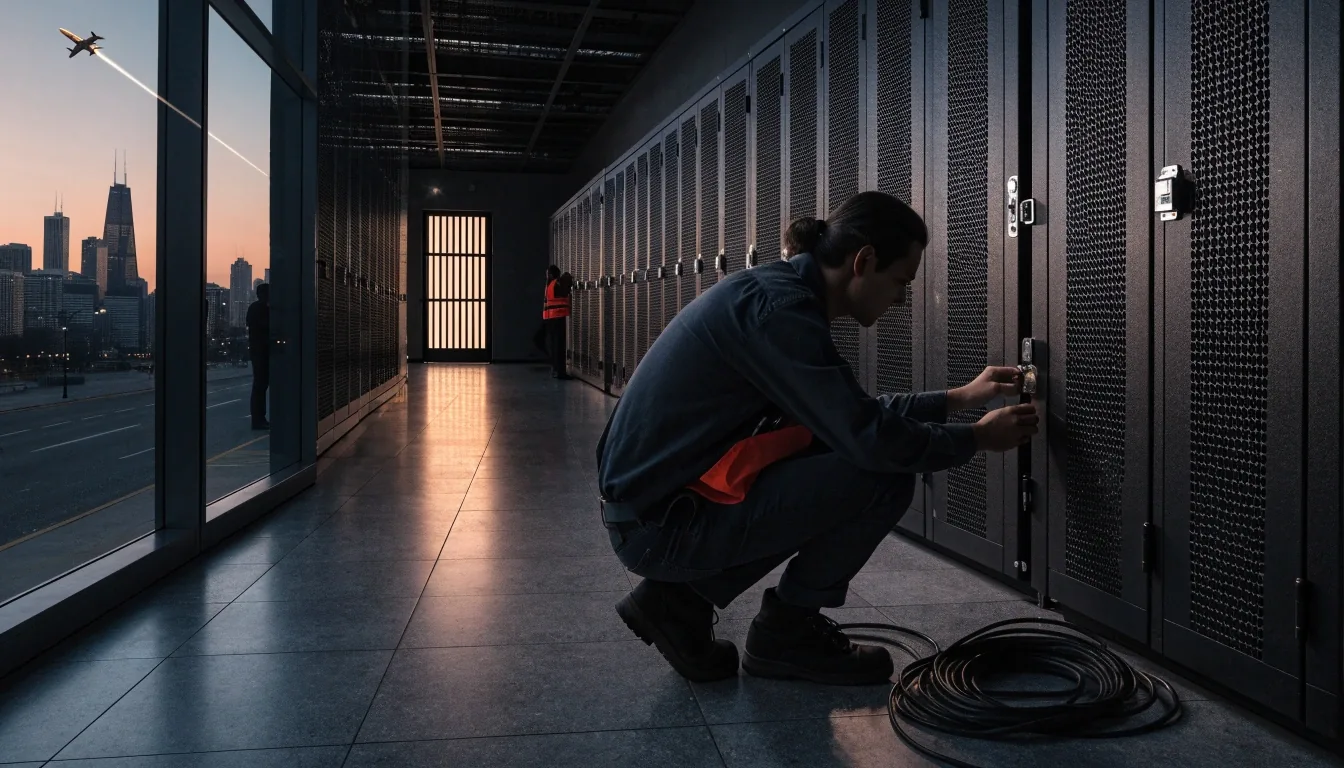
A dark Chicago side street at low bay light, deep shadows on a brick and steel building wall

Chicago custom software since 1999

Representative software projects and what they involved

Case studies are useful when they focus on the decisions, not just the outcome. The projects below are representative of the kind of work Caxy Interactive does: the problem, the constraints, and the approach we took.

What these projects have in common

The same decisions keep showing up

Across sectors, the same questions decide whether a build goes well. What is the smallest version that answers a real question? What existing systems must this talk to? Who actually uses it, and what will they do when it is slow or broken? What happens after launch? The teams that get good outcomes tend to answer these early. The ones that struggle usually skipped a step. If you are at the start of a project, these are the questions worth raising before anyone scopes the work.

Project stories

Six shapes of engagement

Details are generalized where client confidentiality applies, but the engineering shape of each project is real. If a project type looks familiar, that is a good sign.

Legacy replacement

A legacy system replaced without shutting down operations

One of the more common engagements starts with a system that is still running but nobody wants to touch. The business cannot afford downtime, and the original developers are gone. The work involves documenting what the system actually does, often more than anyone realizes, identifying the parts that must keep working, and rebuilding or wrapping functionality in a sequence the business can absorb. This kind of project succeeds through planning more than speed. The goal is a system the client can change, not one that just continues to run.

Internal tooling

An internal tool that replaced a manual process

Another pattern we see often: a critical process running on spreadsheets and email, with one person holding the knowledge. Building a replacement tool means understanding the current process well enough to know which parts are essential and which exist only because the tools are limited. It also means designing for the people who will use it daily, who will not tolerate a slower or more confusing system. These projects get judged by whether the manual process actually goes away.

Customer-facing build

A customer-facing web application

Some projects are about giving customers a better way to interact with a business: booking, ordering, tracking, or self-service. These builds combine design work with solid back-end engineering, because the customer-facing layer cannot hide a weak foundation. Integration with existing systems is almost always part of the scope. The measure of success is straightforward: fewer phone calls, faster transactions, and a system that holds up when usage grows.

Platform build

A digital platform built to scale

For clients building a product, the challenge is designing for customers they have not met yet. A platform needs multi-tenant architecture, subscription billing, and user roles that work at scale. Decisions made early, about data isolation or feature rollout, determine how painful growth will be later. We have worked on platforms in this shape, and the pattern holds: the technical decisions that look small in month one become the expensive ones in year two.

Integration-led

Integration work as the main project

Sometimes the project is not a new system at all. It is connecting systems that already exist so data can move between them without manual effort. This work is unglamorous and often more valuable than building something new. It requires understanding each system's rules, defining what data moves where, and building connections that can be maintained. When one of the systems involves regulated data, we document how it is handled. The result is a process that runs without a person copying between screens.

Regulated data

A healthcare project shaped by integration constraints

Healthcare projects illustrate how external constraints shape scope. Connecting to clinical systems involves standard interfaces and strict rules about data access. The work is less about novel features and more about getting the integration and permissions right. Systems in this category need audit trails and clear documentation of who sees what. The project succeeds when it fits into the clinical or administrative workflow rather than forcing a new one.


Two engineers at a long workbench, side light across coiled cables and a whiteboard out of focus

Most engagements begin the same way: a conversation about what is actually broken, what has to keep working, and who will be using the result. The shape of the project usually follows from those three answers.

How we write these

Why we generalize client details

Client confidentiality means we do not publish specifics about every project, and we do not invent numbers or outcomes to make a case study look stronger. What we can share is the engineering approach and the kinds of problems we take on.

What stays real

The constraints, the sequence of decisions, and the integration shapes stay true to the work. Names, dates, and internal measurements are the parts we hold back, not the engineering.

Going deeper

If you want to discuss a project similar to yours in more detail, the best path is a conversation where we can talk candidly about what we have done and what we would recommend.

Where to start reading

Find the shape closest to your project

A dark workspace at the edge of day, one lit plane across a closed laptop and a cable coil
Replace or wrap a system that cannot go down.
Hands drawing a line just off the edge of a paper sketch on a wide desk
Turn a spreadsheet process into a real internal tool.
Coiled cables and a hinge macro on a dark desk edge under one lit strip
Connect existing systems instead of building new ones.

Questions worth raising before scope is set

None of these require a finished plan. They require a clear answer from the people who will live with the system. Bring them to the first conversation and the scoping gets sharper.

01

What is the smallest version that answers a real question, and what would we learn if we shipped only that part first?

02

Which existing systems must this talk to, and what are the rules each one enforces about the data it holds?

03

Who actually uses it, how often, and what will they do when it is slow or broken? Design for that answer, not for the demo.

04

Who owns the system after launch, and how will the team make changes without calling the original builders back in?

Common questions

Before you ask about a similar project

Can you share the actual client names and numbers?

Not in this format. We keep client names and internal measurements private, and we would rather describe the engineering honestly than dress up a number. In a conversation we can go deeper on what we built, what we would do differently, and how it applies to your situation.

My project does not match any of these shapes. Does that rule you out?

No. The work is web applications, enterprise software, and digital platforms, and the shapes above are common, not exhaustive. The useful first step is describing the problem and the constraints, then deciding together whether the fit is there.

We have an old system nobody wants to touch. Where does that start?

It starts with documentation. Understanding what the system actually does today, which parts must keep working, and where the business can absorb change is what makes a replacement sequence safe. We walk through that in our process, and you can read about it before reaching out.

Do you work with clients outside Chicago?

Yes. Caxy Interactive has worked from Chicago since 1999 and takes on projects for U.S. businesses regardless of where the team sits. Working hours run Monday through Friday, 9:00 AM to 6:00 PM CT.

Discuss a similar project

Tell us what the system has to keep doing

Bring the problem, the constraints, and the people who use it today. Caxy Interactive is at 212 W Van Buren St #1000, Chicago, IL 60607, and reachable at [email protected] or +1 312-594-3354, Monday through Friday, 9:00 AM to 6:00 PM CT.